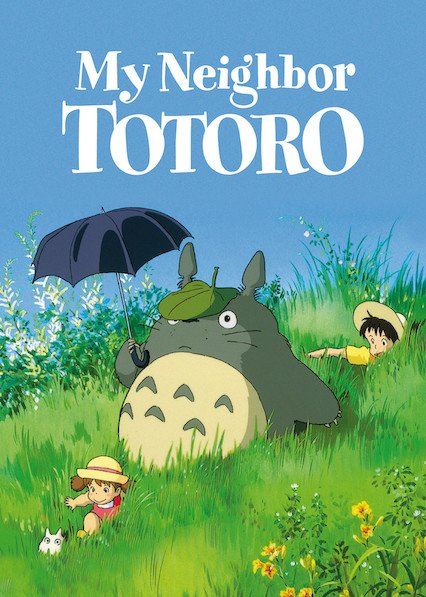
My Neighbor Totoro is the original Daddycake. It was the first film my daughter ever watched and the original inspiration for this blog’s existence.
We watched it on Netflix, and for some reason, the stream was only available with the original Japanese audio and English subtitles. Surprisingly, this didn’t stop her from sitting through the whole thing, fully engaged.
This was a testament to the visual storytelling that Haio Miyazaki had mastered in the 20 years leading up to the release of Totoro. A style that transcends language and that he continued to develop with other Studio Ghibli classics like Kiki’s Delivery Service and Spirited Away.
To me, this was also a testament to children’s ability/desire to understand and their capacity/interest in sound. In the car the other day, for example, I heard my daughter singing along, without hesitation, to the traditional Hawaiian music scattered throughout the Moana soundtrack.
My Neighbor Totoro’s ability to expand children’s imaginations, rather than limit them (as most movies geared towards them tend to do) is its greatest gift. There are no “bad guys,” no “fights,” and there isn’t even an obvious message. But that’s not to say traumatic and difficult situations are avoided.
Besides the friendly, nonverbal forest spirit Totoro, Mei and Satsuki, two sisters aged around four and ten, are the movie’s main characters. Totoro opens with them moving to the countryside with their father. We later learn that their mother is in the hospital, where she remains until the end credits.
The sisters struggle with this reality and the hope/fear that comes with the false alarms of their mother’s return throughout the movie. Luckily, Totoro gives them something (literally) bigger than themselves to believe in.
In the movie’s climax, after an argument with Sotsuki, little sister Mae can’t take it anymore and runs away to visit her mother alone. This is a journey, we learn, that would take an adult several hours on foot.
The whole village helps look for her, and at one point she is feared to have drowned. All seems lost until Sotsuki looks up at the Camphor tree where Totoro lives and remembers their special bond with Mei. I won’t spoil anything here, but I will say Totoro is confirmed to be more than just imaginary.
My Neighbor Totoro is a timeless classic that exemplifies the importance of family and taking care of each other while showing us that big feelings don’t have to be scary. Depending on where we live, Totoro also gives us a glimpse into another way of life. It serves as both a reminder of the help available to us when we ask, and a perfectly gentle, wildly imaginative entry point into the weird, wonderful world of Studio Ghibli. One that keeps viewers of all ages thoroughly engaged, no matter what language it’s in.
Jaymes

Jaymes started Daddycakes and named it after a weekly pancake breakfast for dads and kids that he hosts with his daughter Penelope. He is a clown school graduate, hobby rapper, and creative copywriter.
Leave a Reply